How to Dress Baby for Sleep in All Temperatures
Choosing the right sleepwear for your baby can make bedtime more comfortable and help you feel confident about their safety throughout the night. Babies cannot regulate their body temperature as effectively as adults, so their clothing, bedding, and sleeping environment deserve extra attention.
The best approach is to dress your baby according to the room temperature rather than the weather outside. A chilly evening does not necessarily mean your baby needs several layers, especially if your home stays warm overnight.
Safe sleep practices are just as important as comfort. Always place your baby on their back on a firm, flat sleep surface with only a fitted sheet. Keep loose blankets, pillows, stuffed toys, and other soft items out of the sleep space. Avoid overheating, never use weighted swaddles or sleep sacks, and stop swaddling as soon as your baby shows signs of attempting to roll.
What Should My Baby Sleep In?
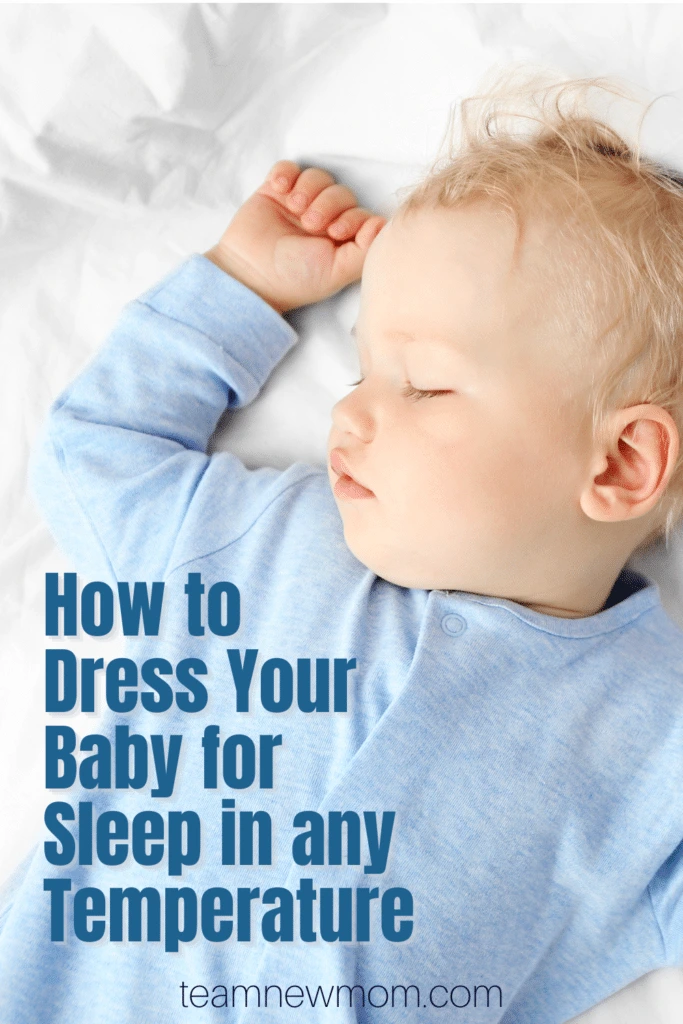
Your baby’s bedtime outfit should provide enough warmth without making them sweaty or uncomfortable. The ideal combination depends on the temperature of the room, your baby’s age, and whether you use a swaddle or wearable blanket.
For most babies, a comfortable starting point is a lightweight cotton or breathable fabric sleeper. Depending on the room temperature, you can add an appropriately rated, non-weighted sleep sack if extra warmth is needed.
Here are some common sleepwear options:
- Short-sleeved bodysuit: A useful base layer in warm rooms, particularly during summer.
- Long-sleeved bodysuit: Provides additional coverage when the room is cooler.
- Footed pajamas: Keep the legs and feet covered without requiring separate socks or blankets.
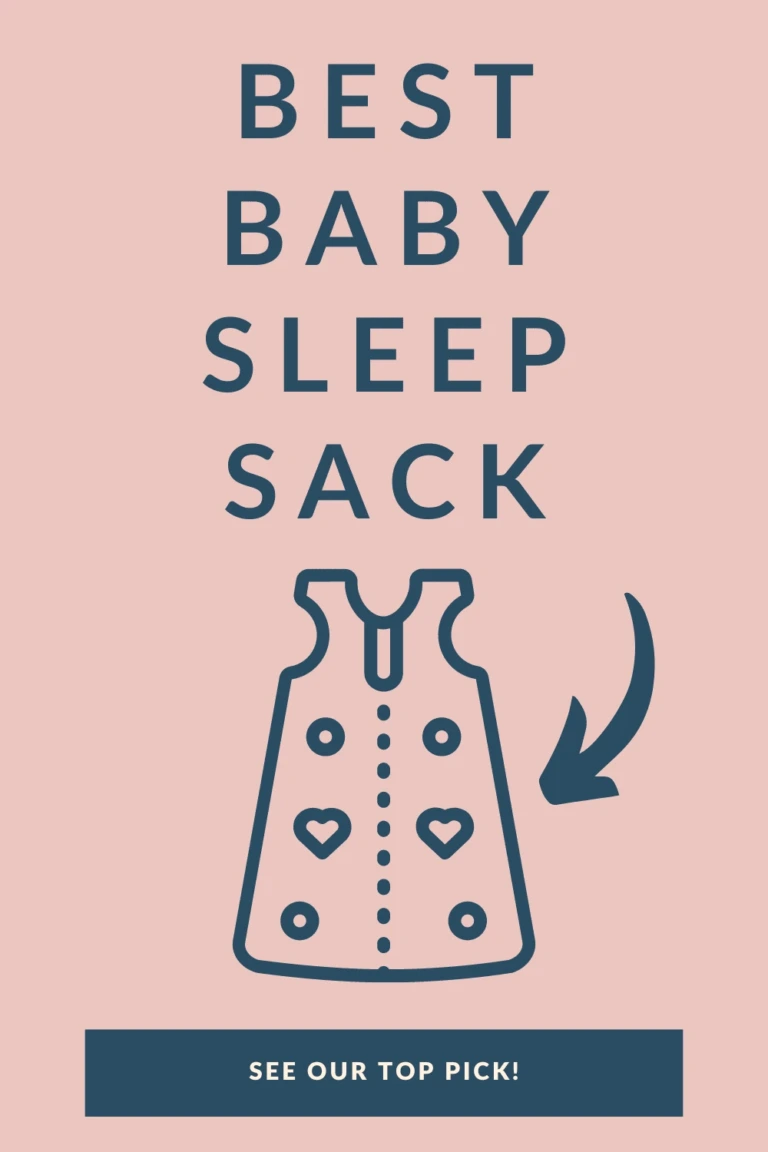
- Lightweight sleep sack: Offers warmth while remaining securely worn around the body, without loose bedding.
- Warmer wearable blanket: Can be suitable for cooler rooms when its temperature rating and the baby’s clothing underneath are appropriate.
Avoid dressing your baby in multiple thick layers simply because you feel cold. Adults and babies may experience the same room differently, and excessive insulation can cause overheating.
Check your baby’s chest, back, or the back of their neck to assess whether they feel comfortably warm. Hands and feet may feel cooler than the rest of the body and are not reliable indicators of overall temperature.
Dressing Baby for Bed With a Swaddle or Sleep Sack
Swaddles and sleep sacks serve different purposes, and understanding the distinction helps you choose the safest option for your baby.
A swaddle wraps around a newborn’s body to create a snug feeling that may help some babies settle. A sleep sack, also called a wearable blanket, is a garment that fits over sleepwear and provides warmth without loose fabric covering the face.
When choosing between them, consider your baby’s developmental stage.
- Newborns who have not started showing signs of rolling: An appropriately fitted, non-weighted swaddle may be an option if used according to safe sleep recommendations.
- Babies showing signs of attempting to roll: Stop swaddling immediately, even if your baby has not completed a roll yet. Transition to an arms-free sleep sack if desired.
- Older babies: An appropriately sized, non-weighted wearable blanket can provide warmth without restricting their arms.
A swaddle should fit securely around the upper body while allowing the hips and legs to bend and move naturally. It should never be tight around the chest or cover the baby’s face.
Choose a sleep sack with a suitable neckline and arm openings so your baby cannot slip inside the garment. Make sure it allows free movement of the hips and does not restrict breathing.
Never use weighted swaddles or weighted sleep sacks. Added weight can interfere with a baby’s ability to breathe and move safely.
Regardless of the sleepwear you choose, always place your baby on their back for every sleep. A swaddle or sleep sack does not replace the need for a safe sleep environment.
What Should Baby Wear Under the Swaddle or Wearable Blanket?
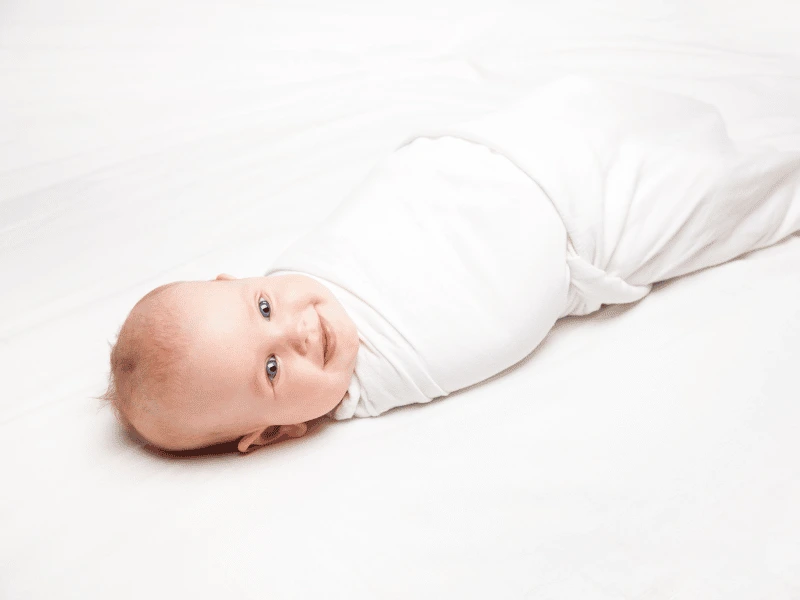
The clothing underneath a swaddle or sleep sack determines how much total insulation your baby receives. The warmer the outer layer, the lighter the clothing underneath may need to be.
For a warm bedroom, a short-sleeved bodysuit under a lightweight sleep sack may be sufficient. In a moderately cool room, long-sleeved cotton pajamas may work better. In a colder room, you might choose a warmer wearable blanket with an appropriate base layer rather than adding several bulky garments.
Use these combinations as general starting points:
- Warm room: A short-sleeved bodysuit or lightweight sleeper, with a light sleep sack if needed.
- Comfortable room: Cotton footed pajamas or a long-sleeved sleeper, with a lightweight or medium-rated sleep sack.
- Cool room: A full-length sleeper paired with a suitable warmer sleep sack.
- Very cold room: Adjust the room temperature when possible and choose sleepwear designed for the measured conditions. Avoid relying on numerous thick layers.
These are not rigid rules. Fabric thickness, garment fit, sleep sack insulation, humidity, and your baby’s individual needs all influence comfort.
Always follow the manufacturer’s instructions for the sleepwear or wearable blanket. If it has a TOG rating, use that information alongside the room temperature and the recommended clothing combinations.
Do not place loose blankets over the swaddle or sleep sack. Also, avoid indoor hats during sleep because babies can release heat through their heads, and hats can slip over the face.
How to Dress Baby for Sleep In Summer Months

Summer nights can make baby sleepwear tricky, particularly when humidity is high or the bedroom remains warm after sunset. The goal is to keep your baby comfortable without adding unnecessary insulation.
Start by checking the actual bedroom temperature. Outdoor temperatures do not tell you how warm the room will be overnight, especially if you use air conditioning or a fan.
For warm conditions, consider the following:
- Choose lightweight, breathable fabrics such as cotton.
- Use a short-sleeved bodysuit or a thin sleeper when the room is warm.
- Consider a lightweight, non-weighted sleep sack only if additional coverage is appropriate for the room temperature.
- Avoid thick fleece pajamas and heavily insulated sleep sacks in hot rooms.
- Keep your baby away from direct hot sunlight and ensure the room has comfortable ventilation.
- Use a room thermometer to monitor changes throughout the night.
If the room is particularly hot, your baby may need only a light layer of clothing. A sleep sack is not essential if it would make the baby too warm.
Air conditioning can help maintain a comfortable room temperature, but avoid directing cold airflow directly at your baby’s face. A fan may help circulate air, provided it is positioned safely and cannot be reached by the baby.
Watch for signs of overheating, including a sweaty chest, damp hair, flushed skin, or a body that feels unusually hot. Remove an unnecessary layer and reassess the room temperature if these appear.
If your baby seems unusually lethargic, has difficulty breathing, is difficult to wake, or shows other concerning symptoms in hot conditions, seek urgent medical attention.
Does My Baby Really Need a Sleep Sack?
No. A sleep sack is optional, not a requirement for safe baby sleep.
Its main advantage is that it can provide warmth without the risks associated with loose blankets in the sleep space. Unlike a blanket that can move over the face, a properly fitted wearable blanket stays on the baby’s body when used correctly.
A sleep sack may be particularly helpful when:
- Your bedroom gets cooler overnight.
- You want a consistent bedtime clothing routine.
- Your baby has outgrown swaddling and still needs an additional layer.
- You want to avoid using loose blankets for warmth.
However, if the room is warm and your baby is comfortable in suitable pajamas, an additional sleep sack may not be necessary.
When shopping for one, look for a product that fits your baby’s current size, allows natural hip movement, and does not have a hood or weighted components. Check the manufacturer’s age, weight, and sizing guidance.
Do not use a sleep sack that is too large, since your baby could slip down inside it. Similarly, avoid tight garments that restrict movement or breathing.
As your baby grows, reassess the fit rather than assuming the same product will remain suitable indefinitely.
How to Tell if Baby is Cold at Night?
It can be difficult to know whether your baby is too cold because their hands and feet often feel cooler than the rest of their body. Instead of judging by their fingers or toes, check their chest, upper back, or the back of their neck.
A baby who feels comfortably warm in these areas and has normal skin color is generally dressed appropriately. If the torso feels cool, you may need to add a suitable layer or make the room more comfortable.
Possible signs that your baby may be cold include:
- A cool chest or upper back.
- A torso that feels noticeably cooler than usual.
- Unusual fussiness alongside other signs of discomfort.
- Shivering, although this is not a reliable or common indicator of cold in young infants.
Do not automatically add clothing whenever your baby wakes during the night. Hunger, a wet diaper, gas, and normal sleep transitions can also cause waking.
On the other hand, feeling hot, sweating, damp hair, and flushed skin may indicate that your baby has too many layers. Remove excess clothing rather than adding more.
If your baby is unusually cold to the touch, has a persistently abnormal skin color, seems weak, is difficult to wake, or has breathing difficulties, seek medical advice promptly. A temperature reading and your baby’s overall behavior can help determine whether further assessment is needed.
For young infants, particularly newborns, concerns about an abnormal body temperature should be taken seriously. Do not rely on clothing adjustments alone if your baby seems unwell.
Baby Sleepwear Temperature Guide
The following table provides general starting points for choosing baby sleepwear. Room temperature is more useful than the outdoor forecast, and the best outfit depends on the thickness of each layer.
TOG is a measurement of thermal insulation. A higher rating generally means a warmer sleep sack, while a lower rating means less insulation.
| Bedroom temperature | Suggested sleepwear | Sleep sack guidance |
|---|---|---|
| Above 26°C (79°F) | Very light bodysuit or minimal suitable sleep clothing | Often unnecessary; avoid adding insulation if the baby is already warm |
| 24 to 26°C (75 to 79°F) | Lightweight short-sleeved bodysuit or thin cotton sleeper | Consider a very lightweight option only if needed |
| 20 to 23°C (68 to 73°F) | Cotton pajamas or a light long-sleeved sleeper | A lightweight sleep sack may be appropriate |
| 18 to 20°C (64 to 68°F) | Full-length cotton pajamas | A medium-insulation sleep sack may be suitable |
| 16 to 18°C (61 to 64°F) | Full-length sleeper with carefully selected additional warmth | A warmer sleep sack may be appropriate, following its specific instructions |
| Below 16°C (61°F) | Full-length sleepwear and an appropriately rated wearable blanket | Improve room warmth where possible and review the product’s temperature guidance |
These ranges are approximate rather than universal medical recommendations. Different sleep sacks use different TOG ratings, and brands may recommend different clothing combinations for the same temperature. Always check the specific product’s guidance.
If your home experiences substantial temperature changes overnight, use a room thermometer and adjust the clothing combination when necessary. Do not compensate for a very cold room by piling on numerous layers.
Regardless of temperature, keep your baby on their back in an uncluttered sleep space, avoid weighted sleep products, and never use a hat indoors for sleep.
What is a TOG rating, and should I pay attention to it?
TOG stands for Thermal Overall Grade. It measures the thermal resistance of a fabric, helping you understand how much insulation a sleep sack or wearable blanket provides.
A lower TOG rating generally indicates a lighter product, while a higher rating indicates greater insulation. This makes TOG useful when choosing a sleep sack for different bedroom temperatures.
Here is a general overview of common ratings:
| TOG rating | General insulation level | Typical use |
|---|---|---|
| 0.2 to 0.5 TOG | Very light | Hot rooms and warm weather |
| 0.5 to 1.0 TOG | Light | Mild to warm rooms |
| 1.0 to 2.0 TOG | Moderate | Comfortable or mildly cool rooms |
| 2.5 TOG | Warmer | Cooler bedrooms |
| 3.0 to 3.5 TOG | Heavy insulation | Cold environments, only when specifically suitable |
The temperature recommendations for these ratings vary by manufacturer. Treat this table as a broad comparison, not a substitute for the instructions supplied with your baby’s sleep sack.
TOG is useful, but it does not tell the whole story. A baby’s base clothing, the room’s humidity, air circulation, and the fit of the garment also influence comfort.
For example, a medium-rated sleep sack worn over thick fleece pajamas may provide more warmth than intended. The same sleep sack worn over a thin cotton sleeper may be more appropriate for the room.
When buying a sleep sack, look for clear temperature guidance and recommended underlayers. Avoid products that make you rely on guesswork to determine whether your baby will be too warm.
Most importantly, do not use weighted sleep sacks, even if their insulation rating appears suitable.
Helpful Tips for Choosing Baby Bedtime Clothes
Selecting bedtime clothing becomes easier when you focus on comfort, safe construction, and the conditions in your home. You do not need an elaborate collection of sleepwear to dress your baby appropriately.
Keep these practical tips in mind:
1. Check the bedroom temperature. A small room thermometer can help you choose suitable clothing instead of guessing based on the weather outside.
2. Choose breathable fabrics. Soft cotton and other suitable lightweight fabrics can be comfortable for everyday sleep. Consider the garment’s actual thickness rather than relying on its material name alone.
3. Use layers thoughtfully. Choose one appropriate base outfit and add a sleep sack if needed. Avoid piling on several thick layers.
4. Check your baby’s torso. Feel the chest, upper back, or back of the neck to assess warmth. Cool hands and feet alone do not necessarily mean your baby needs more clothing.
5. Watch for overheating. Sweating, damp hair, flushed skin, and a hot torso are reasons to reassess the layers and room temperature.
6. Prioritize a good fit. Pajamas should allow comfortable movement, and a sleep sack should fit securely around the shoulders and neck without restricting breathing or hip movement.
7. Avoid unsafe sleep accessories. Do not use weighted swaddles or sleep sacks, loose blankets, pillows, or bulky bedding. Keep hats off your baby’s head indoors during sleep.
8. Stop swaddling when rolling signs appear. Transition to an arms-free sleep arrangement as soon as your baby shows signs of attempting to roll. Do not wait until the baby successfully rolls over.
9. Follow product instructions. Use the manufacturer’s temperature recommendations, sizing information, and guidance about clothing underneath a wearable blanket.
10. Keep the sleep space simple. Place your baby on their back on a firm, flat mattress with a fitted sheet and no other loose objects.
11. Adjust for changing conditions. If the room becomes warmer or cooler during the night, reassess the clothing layers instead of assuming the same outfit will always be suitable.
12. Seek help when something seems wrong. If your baby appears unusually hot or cold, is difficult to wake, has breathing problems, or seems seriously unwell, do not rely on changing their clothes as the only response.
Dressing your baby for sleep does not have to be complicated. Start with the room temperature, choose comfortable and appropriately fitted clothing, and add a non-weighted sleep sack only when it makes sense. With these habits and consistent safe sleep practices, you can help your baby remain comfortable while reducing avoidable sleep-related risks.