How Much Should an 8 Month Old Sleep? Our Best Tips!
By eight months, babies are becoming more active, curious, and aware of the people around them. They may be crawling, sitting independently, practicing new sounds, and exploring everything within reach. These exciting changes can influence how easily they fall asleep, how long they nap, and whether they wake during the night.

Understanding your baby’s sleep needs can help you establish a predictable routine without expecting every day to look the same. Some eight-month-olds sleep peacefully for long stretches, while others still wake for comfort, feeding, or reassurance.
The key is to focus on total sleep, recognize your baby’s individual patterns, and create habits that support healthy development. With a flexible schedule and a safe sleeping environment, you can help your little one get the rest they need.
Understanding Your 8-Month-Old’s Sleep Needs
Sleep supports an eight-month-old’s physical growth, brain development, memory, and emotional regulation. Babies at this age are learning new skills rapidly, and adequate rest helps them process what they experience throughout the day.
However, sleep patterns differ from one baby to another. Your child might take two predictable naps and sleep for most of the night, or they might experience shorter naps and occasional nighttime awakenings.
Instead of comparing your baby’s routine with another child’s schedule, consider their total sleep over 24 hours, mood, feeding patterns, and general development.
Hours of Sleep Needed
According to American Academy of Pediatrics guidance, babies between four and twelve months generally need 12 to 16 hours of sleep in a 24-hour period, including naps.
For an eight-month-old, this often means approximately 10 to 12 hours of nighttime sleep, with the remaining hours spread across daytime naps. These are general patterns rather than strict requirements.
Here is how a typical day’s sleep might be divided:
- Nighttime sleep: Around 10 to 12 hours, sometimes interrupted by brief awakenings.
- Morning nap: Often 45 minutes to 1.5 hours.
- Afternoon nap: Often 1 to 2 hours.
- Total daily sleep: Usually 12 to 16 hours, including daytime naps.
Some babies sleep longer at night and take shorter naps, while others need more daytime rest. Both patterns can be normal if the baby is getting enough overall sleep and is otherwise doing well.
Signs that your baby may be getting adequate rest include waking in a reasonably good mood, showing interest in play, feeding normally, and remaining alert during periods of wakefulness.
On the other hand, frequent yawning, rubbing the eyes, increased fussiness, or difficulty settling may indicate tiredness. These signs are worth observing alongside your baby’s usual behavior rather than treating any single sign as a diagnosis.
If your baby consistently sleeps much less than expected, is unusually difficult to wake, feeds poorly, or seems persistently exhausted, speak with your pediatrician.
Significance of Nap Transitions
At eight months, most babies are moving toward a consistent two-nap routine. They often take one nap in the morning and another in the afternoon, with enough awake time between sleep periods to build sleep pressure naturally.
A common challenge is determining whether a baby is ready for a change in their schedule. Short naps or resistance at bedtime do not automatically mean another transition is necessary. Teething discomfort, developmental changes, illness, and an inconsistent routine can also affect sleep.
Your baby may be ready for adjustments if you regularly notice:
- Difficulty falling asleep at one of their usual nap times.
- Bedtime becoming increasingly late despite a consistent routine.
- One nap repeatedly disappearing.
- Longer periods of comfortable wakefulness between naps.
- A consistent pattern of resisting sleep without appearing overtired.
At this age, dropping to one nap is usually premature. Most babies continue to benefit from two daytime naps well into toddlerhood, although the eventual transition varies.
Try adjusting nap timing gradually rather than removing a nap suddenly. For example, if your baby struggles to fall asleep during the morning nap, shift the nap by 10 to 15 minutes and observe the results over several days.
The aim is to balance awake time and rest. An overtired baby may become more difficult to settle, while a baby who has not been awake long enough may resist sleep because they are not ready.
Developing a Sleep Schedule
A regular sleep schedule helps your baby understand when it is time to play, eat, rest, and settle for the night. At eight months, predictable routines can be especially helpful because babies are becoming more aware of their surroundings and may resist sleep when something exciting is happening.
You do not need to follow the clock perfectly. Instead, establish a general pattern that fits your household and your baby’s natural sleep tendencies.
A practical schedule usually includes a consistent morning wake-up time, two naps, regular feeding opportunities, and a calming bedtime routine.
Consistency matters more than perfection. If your baby wakes earlier than expected or takes an unusually short nap, make small adjustments rather than forcing the rest of the day to follow an unrealistic timetable.
Sample Schedules and Routines
The following table provides an example of how you might organize an eight-month-old’s day. Adjust the times to match your baby’s wake-up time, feeding needs, and sleep cues.
| Time | Activity |
|---|---|
| 7:00 AM | Wake up, breastfeed or offer formula |
| 8:00 AM | Breakfast with appropriate solid foods |
| 9:30 AM | Morning nap |
| 11:00 AM | Wake up, milk feeding, and playtime |
| 12:30 PM | Lunch and quiet activities |
| 2:00 PM | Afternoon nap |
| 3:30 PM | Wake up, milk feeding, and active play |
| 5:30 PM | Dinner with suitable solid foods |
| 6:15 PM | Calm play, bath if desired, and bedtime preparation |
| 6:45 PM | Final milk feeding and bedtime routine |
| 7:00 PM | Nighttime sleep |
These times are illustrative, not medical requirements. Nap lengths and feeding times may vary, and some babies need an earlier or later bedtime.
A good routine follows a few simple principles:
- Keep mornings predictable. A reasonably consistent wake-up time can help anchor the rest of the day.
- Protect daytime naps. Offer naps before your baby becomes excessively tired.
- Allow time between the final nap and bedtime. Many eight-month-olds manage roughly three hours of wakefulness before bed, although individual needs vary.
- Use a repeatable bedtime sequence. Feeding, changing into sleepwear, reading a short book, and singing a quiet song can signal that the day is ending.
- Stay flexible. If your baby takes a short nap, bedtime may need to move earlier.
You can also keep a simple sleep diary for several days. Record wake-up times, naps, bedtime, and nighttime awakenings. Looking at patterns across multiple days can be more useful than judging a single difficult night.
Adapting to Your Baby’s Sleep Cues
Your baby may not always become sleepy at exactly the same time. Growth, activity levels, feeding, and developmental changes can all influence when they need rest.
Learning to recognize early signs of tiredness can make settling easier. Common signs include:
- Looking away from toys or people.
- Becoming quieter or less interested in play.
- Rubbing the eyes or face.
- Yawning repeatedly.
- Becoming clingy or mildly irritable.
When these signals appear, begin a short wind-down routine. Reduce stimulation, speak softly, and move toward the sleeping area.
Try not to wait until your baby is crying intensely or struggling to remain calm. Some babies become more alert and active when they are overtired, which can make tiredness harder to recognize.
Wake windows, or the time a baby spends awake between sleep periods, can be useful planning guides. At eight months, many babies stay awake for approximately two to three and a half hours at a time, with longer stretches often occurring before bedtime. These ranges are flexible, not strict rules.
If your baby consistently resists a nap despite appearing comfortable and alert, consider whether the timing is too early. If they become distressed before the planned nap, they may need sleep sooner.
Use both the clock and your baby’s behavior. Neither should be the sole deciding factor.
Navigating Sleep Regressions and Disturbances
Sleep can become unpredictable even after your baby develops a reliable routine. An infant who previously slept for long stretches may suddenly wake more often, take shorter naps, or need additional help settling.
Changes in sleep can coincide with developmental milestones, separation anxiety, teething discomfort, illness, or changes to the daily schedule. The term sleep regression is commonly used for periods when sleep temporarily becomes more difficult, but it does not describe a formal medical condition.
Before assuming that your baby is experiencing a regression, consider practical causes such as hunger, discomfort, room temperature, or a disrupted routine.
Dealing with the 8-Month Sleep Regression
Around eight months, many babies are developing new physical and cognitive abilities. They may practice rolling, sitting, crawling, pulling themselves up, or making new sounds. Their growing awareness of people and surroundings can also make it harder to settle when it is time to sleep.
These developments may coincide with more frequent night wakings, bedtime resistance, or disrupted naps.
A temporary change in sleep does not necessarily mean your routine has stopped working. Consider the following approaches:
Maintain familiar routines. Continue using the same calming activities before naps and bedtime. Familiar patterns can provide reassurance during periods of change.
Offer plenty of movement and exploration. Give your baby supervised opportunities to practice new skills while awake. This supports development without turning bedtime into an extension of playtime.
Review nap timing. If your baby repeatedly struggles to fall asleep at bedtime, look at daytime naps and the amount of awake time before bed. Make small changes rather than overhauling the entire schedule.
Respond calmly to nighttime waking. Keep lights dim, minimize stimulation, and provide the comfort your baby needs. Avoid turning nighttime awakenings into long periods of play.
Continue practicing safe sleep. Always place your baby on their back at the start of every sleep. If they can independently roll in both directions, you do not need to keep repositioning them onto their back if they roll over themselves. Keep the sleep space free of loose bedding and other objects.
Sleep disruptions may settle as your baby adjusts to new skills or changes in routine. If they persist, become severe, or occur alongside symptoms of illness, discuss them with your pediatrician.
Handling Separation Anxiety and Night Wakings
Separation anxiety often becomes noticeable during the second half of the first year. Your baby may understand that you still exist when you leave the room, but they may not yet feel comfortable being apart from you.
This can lead to crying at bedtime, reaching for you when you step away, or waking during the night and needing reassurance.
A gentle, predictable response can help your baby feel secure while gradually learning to settle.
- Practice short separations during the day. Brief periods of playing independently while you remain nearby can help your baby become more comfortable with distance.
- Use a consistent goodbye routine. Calmly leaving and returning in a predictable way can build confidence.
- Offer reassurance at bedtime. A familiar voice, gentle patting, or a brief cuddle may help your baby settle.
- Keep nighttime interactions quiet. Use dim lighting and avoid stimulating activities when responding to a waking.
- Choose a response you can maintain. Whether you offer brief reassurance or stay beside your baby until they settle, consistency can make the routine easier to understand.
You do not have to ignore your baby’s cries to encourage healthy sleep. Comfort and responsive caregiving are compatible with gradually building predictable sleep habits.
Night wakings can also happen because of hunger, discomfort, illness, or an environmental disturbance. Consider the reason for the waking instead of automatically treating every episode as a behavioral issue.
If your baby has a sudden change in sleep accompanied by fever, breathing difficulties, unusual lethargy, persistent pain, or feeding problems, seek appropriate medical advice.
Fostering Healthy Sleep Habits
Healthy sleep habits develop through a combination of predictable routines, responsive caregiving, suitable feeding, and a safe sleeping environment.
At eight months, your baby may be ready to practice settling with less assistance, but there is no single method that works for every family. Some babies settle independently, while others benefit from gradual changes in how they are comforted.
The goal is not to achieve perfect sleep every night. It is to create a routine that supports your baby’s development and is manageable for the whole family.
The Role of Feeding and Solid Foods
Nutrition and sleep are closely connected because a hungry or uncomfortable baby may struggle to settle. At eight months, breast milk or infant formula remains an important source of nutrition, while complementary foods provide additional nutrients and opportunities to explore different textures.
Offer age-appropriate solid foods during the day and continue milk feeds according to your baby’s needs. Foods rich in iron, such as suitable meat, lentils, beans, and iron-fortified infant cereals, can be useful parts of a varied diet when prepared safely.
A few practical feeding habits may help support sleep:
Offer regular feeding opportunities. Predictable meals and milk feeds can make the day easier to organize, although feeding should remain responsive to hunger and fullness cues.
Avoid relying on extra food for longer sleep. Giving a large meal or additional cereal immediately before bed does not reliably prevent nighttime waking. Never add cereal to a bottle unless a healthcare professional specifically recommends it for a medical reason.
Keep bedtime feeds calm. If you breastfeed or offer formula before bed, make the experience quiet and relaxed. If possible, finish feeding before your baby is fully asleep so they have an opportunity to practice settling in other ways.
Do not assume every waking means hunger. Some babies still need nighttime feeds, while others wake for comfort or because of developmental changes. Feeding needs vary, so discuss concerns about night weaning with your pediatrician.
Introduce solid foods safely. Prepare foods in developmentally appropriate textures and avoid choking hazards. Never put your baby to bed with a bottle propped in their mouth.
There is no need to stop breastfeeding or formula feeding at night solely because your baby has reached eight months. Whether nighttime feeds remain necessary depends on individual growth, feeding patterns, and medical advice.
Creating a Conducive Sleep Environment
A comfortable, safe sleep environment helps your baby settle while reducing avoidable risks. You do not need an elaborate nursery or expensive sleep products to create an effective setup.
Start with the essentials:
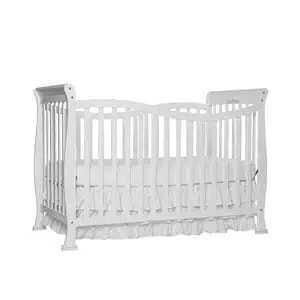
- Use a firm, flat sleep surface. Place your baby in a safety-approved crib, bassinet, or play yard with a firm mattress and fitted sheet.
- Start every sleep on the back. Place your baby on their back for naps and nighttime sleep. If they can roll independently in both directions, they can remain in the position they move into themselves.
- Keep the sleep space empty. Remove pillows, loose blankets, stuffed toys, crib bumpers, and other soft objects.
- Choose comfortable clothing. Dress your baby appropriately for the room temperature. A properly fitted wearable blanket may be used if needed, but weighted sleep products should be avoided.
- Keep the room comfortable. Avoid overheating and check for sweating, a hot chest, or flushed skin.
- Reduce excessive stimulation. Dim lights and keep activity levels low as bedtime approaches.
A dark room and steady background noise may help some babies relax. If you use a sound machine, keep the volume low and position it well away from the crib.
Avoid using positioners, inclined sleepers, or products that claim to prevent waking by restricting movement. These can introduce safety risks.
Room-sharing without bed-sharing is recommended by the American Academy of Pediatrics, ideally for at least the first six months. At eight months, if your baby sleeps in a separate room, continue following safe sleep practices and use a suitable crib or play yard.
You can also create a short bedtime ritual that signals the transition from daytime activity to rest. A clean diaper, sleepwear, a quiet story, and a gentle cuddle may be enough. Repeating the same sequence can help make bedtime more predictable.
What to Expect in the Coming Months
As your baby approaches their first birthday, their sleep routine may become more established, although changes will continue. Crawling, pulling up, cruising along furniture, teething, and growing social awareness can all affect sleep.
Many babies continue taking two naps for much of the first year and beyond. Eventually, daytime sleep needs change, and a transition to one nap becomes appropriate during toddlerhood.
Nighttime sleep may also become more consistent, but occasional waking remains normal. Illness, travel, changes in routine, and developmental milestones can temporarily disrupt even a well-established schedule.
Rather than expecting steady improvement every week, look for longer-term patterns. If your baby is generally alert when awake, feeding well, growing as expected, and getting an appropriate amount of sleep, occasional difficult nights are not necessarily a concern.
Physical and Developmental Milestones
Eight-month-olds develop at different rates. Some may be crawling or pulling themselves up, while others are concentrating on sitting, rolling, reaching, or communicating through sounds and gestures.
These skills can influence sleep in several ways.
Increased physical activity: Babies who spend the day practicing new movements may need sufficient opportunities for rest. They may also continue practicing movements when they wake in their crib.
Growing awareness of caregivers: Your baby may notice when you leave the room and become more vocal or upset at bedtime. Familiar routines and calm reassurance can help.
Changing nap patterns: As your baby becomes more comfortable staying awake for longer periods, the timing of naps may shift. Two naps generally remain appropriate at this age, but their length and timing can vary.
New communication skills: Babbling, responding to voices, and showing interest in people can make your baby more alert during quiet moments. A gradual reduction in stimulation before bed can help signal that it is time to rest.
Support these developments with supervised floor play, age-appropriate interaction, and opportunities to explore safely while awake. Keep the crib free of toys and other loose objects during sleep, even if your baby enjoys playing with them during the day.
Remember that developmental milestones do not follow an identical timetable for every child. If you have concerns about your baby’s movement, responsiveness, feeding, growth, or overall development, discuss them with your pediatrician.
Ultimately, an eight-month-old’s sleep routine should balance adequate rest, safe sleep practices, and the flexibility to respond to changing needs. Aim for 12 to 16 hours of total sleep across the day and night, establish a calming bedtime routine, and pay attention to your baby’s individual cues. With patience and consistency, you can build healthy sleep habits that continue to evolve as your little one grows.