The Ultimate Guide to Decluttering Your Home Before Baby Arrives
Preparing for a new baby is exciting, but it can also make you realize just how much stuff has accumulated around your home. Between baby clothes, diapers, feeding supplies, and nursery essentials, finding space for everything can quickly become overwhelming.
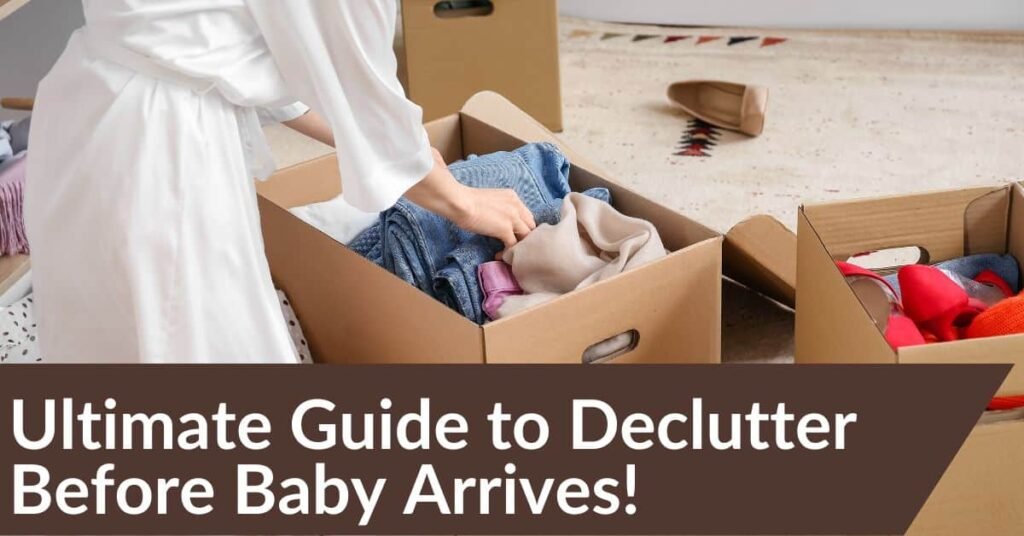
That’s why decluttering before baby arrives is one of the smartest ways to prepare your home for this exciting new chapter.
You don’t need a perfectly organized house or an expensive storage system. The goal is to create a comfortable, functional environment where everyday essentials are easy to find and unnecessary clutter doesn’t add to your stress.
Whether you’re in your first trimester or counting down the final weeks, this guide will help you simplify your space without exhausting yourself.
Why Declutter Before Baby Arrives?
A newborn brings plenty of wonderful changes, along with a surprising amount of equipment and supplies. Clearing unnecessary belongings before delivery helps you make room for those additions while creating a more manageable household.
One of the biggest benefits is convenience. When diapers, clean clothes, and feeding supplies have designated places, you spend less time searching for things during those busy newborn days.
Decluttering can also make routine cleaning easier. Fewer objects on countertops, shelves, and floors mean fewer things to move whenever you need to wipe surfaces or vacuum.
Other practical benefits include:
- More usable space: Create room for a bassinet, changing supplies, stroller, and other necessities.
- Less visual clutter: Make your living areas feel calmer and more welcoming.
- Better organization: Identify what you already own before buying additional items.
- Easier postpartum recovery: Reduce unnecessary household tasks during the first weeks after delivery.
- Improved safety: Clear walkways and remove unstable objects that could become hazards.
- Less unnecessary spending: Avoid purchasing duplicates of items hidden in crowded drawers or closets.
Most importantly, decluttering gives you an opportunity to focus on what your growing family actually needs.
Steps to Decluttering When You’re Really Pregnant
Pregnancy can make even ordinary household chores feel exhausting, especially during the later months. Instead of attempting a complete home transformation in one weekend, use a gradual approach that respects your energy levels.
Step 1: Start with a simple walkthrough
Look around each room and identify the areas that feel crowded or difficult to use. Write down a few specific tasks, such as clearing a bathroom cabinet or organizing one kitchen drawer.
Step 2: Prioritize essential spaces
Begin with areas you’ll use frequently after delivery. Your bedroom, bathroom, kitchen, and baby’s sleeping area are usually more important than rarely used storage spaces.
Step 3: Work in short sessions
Set aside 10 to 20 minutes for one manageable task. If you’re feeling tired, even five minutes of sorting can make a difference.
Step 4: Create sorting categories
Use separate containers for belongings you want to keep, donate, recycle, or discard. Add a temporary relocation box for items that belong elsewhere in your home.
Step 5: Make decisions as you go
Ask whether each item is useful, needed, or truly meaningful. If it serves no purpose and you haven’t used it in years, consider letting it go.
Step 6: Arrange help for physical tasks
Ask your partner, family members, or friends to handle heavy boxes, high shelves, furniture moving, and other strenuous activities.
Step 7: Finish one small project
Completing a drawer or cabinet provides a sense of progress without leaving the entire room in disorder.
Pregnancy is not the time to push through dizziness, pain, or exhaustion. Avoid heavy lifting and tasks involving unsafe chemicals, and follow any activity restrictions recommended by your maternity care professional.
Tips to Make Decluttering Easier on Yourself
Decluttering should simplify your life, not become another stressful responsibility.
Start by choosing tasks that match how you feel that day. If you’re energetic, you might sort a closet. On a low-energy day, organizing paperwork or deleting unnecessary phone photos may be more realistic.
A few strategies can make the process easier:
- Sit while sorting: Bring a basket of lightweight items to a comfortable table or chair.
- Use smaller containers: Avoid filling large boxes that become difficult to carry.
- Keep water nearby: Stay hydrated and take regular breaks.
- Avoid perfectionism: A functional drawer is more valuable than an elaborate organization system you’ll struggle to maintain.
- Set a stopping point: Decide how long you’ll work before beginning.
- Use labels: Clearly marked containers make it easier for other family members to put things away.
- Delegate disposal: Have someone else take donations, recycling, and rubbish out of the house.
Remember that you don’t need to declutter every possession before your due date. Concentrate on the changes that will make daily life easier.
Preparing for Baby
Once you’ve removed unnecessary belongings, you can begin organizing your home around your baby’s everyday needs.
Start with the sleeping area. Whether your newborn will sleep in a nursery or share your bedroom, keep the sleep space simple and safe. A firm, flat mattress with a fitted sheet is appropriate, while pillows, loose blankets, stuffed animals, and other soft objects should remain outside the crib or bassinet.
Next, establish convenient storage for diaper changes. Keep diapers, wipes, clean clothes, and other essentials within easy reach of the changing area, but out of your baby’s reach. Never leave a baby unattended on an elevated changing surface.
Organize clothing by size rather than putting every outfit into one drawer. Store larger sizes separately so your current essentials remain accessible.
In the kitchen, designate a clean location for bottles, feeding accessories, and related supplies. If you plan to breastfeed, a small basket for nursing pads, burp cloths, and other frequently used items can be helpful.
You may also want to create a portable baby essentials basket containing:
- A few diapers and a packet of wipes
- A clean change of clothing
- Burp cloths
- A spare changing mat
- Any other age-appropriate items you regularly need
Keep medicines, creams, and small hazardous objects securely stored rather than in an accessible basket.
The best baby organization system is one that fits your actual routine, not one designed solely to look attractive.
Involving the Family
Preparing for a baby shouldn’t become one person’s responsibility.
Your partner, children, and other household members can contribute in ways that match their abilities and availability.
Start with a conversation about which spaces need attention. Agree on practical goals, such as clearing the hallway closet or making room for baby supplies in the bathroom.
Divide responsibilities clearly. One person might sort paperwork while another handles garage storage or donation drop-offs.
If you have older children, invite them to participate in age-appropriate activities. They can sort toys, choose books to donate, or help organize their own belongings.
Avoid making children feel that the new baby is taking away their space or possessions. Give them opportunities to make decisions and explain why certain household changes are necessary.
You can also invite trusted relatives to help with specific projects. Asking someone to organize a pantry for an hour is often more effective than making a general request for assistance.
Working together makes preparation more manageable and helps everyone feel involved in welcoming the new family member.
Sustainable Decluttering
Decluttering doesn’t have to mean sending everything you no longer want to the landfill.
A thoughtful approach allows you to create space while reducing unnecessary waste.
Begin by separating belongings that are still usable from items that are damaged or unsafe.
Consider donating clean clothing, household goods, books, and furniture to organizations that accept them. Some community groups may also welcome gently used baby supplies, provided they meet current safety requirements.
Other sustainable options include:
- Selling: List valuable items you no longer need.
- Sharing: Offer useful belongings to friends or relatives.
- Repairing: Fix items that can be restored safely and economically.
- Recycling: Follow local recycling requirements for paper, cardboard, metals, and electronics.
- Repurposing: Give sturdy containers and baskets new organizational uses.
Be especially careful with secondhand baby equipment. Check current safety guidance and product recalls before reusing or donating cribs, car seats, sleep products, and other safety-sensitive items.
Sustainable decluttering also involves changing future shopping habits. Before purchasing another storage basket or nursery accessory, consider whether something you already own can serve the same purpose.
Maintaining the Declutter
After spending time simplifying your home, the next challenge is keeping clutter from returning.
Fortunately, maintenance doesn’t require hours of daily cleaning.
Develop small habits that prevent belongings from accumulating in the first place.
For example, spend five minutes each evening returning commonly used items to their designated locations. Keep a donation bag in a closet so unwanted items have somewhere to go immediately.
Try these manageable routines:
- Clear kitchen countertops after meals.
- Sort incoming mail before it piles up.
- Return laundry to drawers and closets regularly.
- Review baby clothes as your child outgrows them.
- Keep a small basket for misplaced household items.
- Avoid buying duplicates without checking existing supplies.
- Reassess storage areas every few months.
As your baby grows, your organization needs will change. A drawer that once held newborn clothing may eventually need to accommodate larger outfits, toys, or feeding accessories.
Allow your system to evolve rather than expecting one arrangement to work forever.
Ready, Set, Declutter!
You don’t need a spotless home to welcome your baby. You need a space that feels safe, practical, and comfortable for your family.
Begin with one small area today. Clear a nightstand, sort a bathroom drawer, or remove expired products from a cabinet.
Once that task is finished, choose another whenever your energy allows.
Some days you’ll accomplish several projects. Other days, rest will be the most productive choice.
Every unnecessary item you remove creates a little more room for the routines and experiences that matter.
By focusing on progress instead of perfection, you can prepare your home for your baby’s arrival without making pregnancy unnecessarily demanding.
Need Extra Help? Don’t We All!
Even with a good plan, decluttering can feel difficult when you’re balancing pregnancy appointments, work, family responsibilities, and preparations for delivery.
There’s no reason to handle everything alone.
If your budget allows, consider hiring a professional organizer or cleaning service for specific projects. You don’t necessarily need a full-house service. A few hours of assistance with closets, storage areas, or kitchen organization may be enough.
You can also arrange a decluttering afternoon with a trusted friend or family member.
Before they arrive, prepare a short list of tasks so everyone knows what needs to happen.
For example, you might ask someone to:
- Carry donation boxes to the car.
- Move seasonal belongings into storage.
- Clean shelves after you’ve sorted their contents.
- Assemble nursery storage furniture.
- Organize lightweight baby clothing.
- Take unwanted electronics to an appropriate recycling location.
If physical help isn’t available, focus on tasks you can complete comfortably while seated.
You can also postpone nonessential projects until after your baby arrives and your household has settled into a routine.
Accepting assistance is a practical way to protect your energy and make the process more manageable.
100 Items to Toss Before Baby is Born
Not sure where to begin? Use this room-by-room checklist to identify unnecessary belongings that may be taking up valuable space.
You don’t have to discard everything listed. Keep items that are useful, safe, or meaningful, and donate or recycle whenever appropriate.
Kitchen: Items 1 to 20
- Expired pantry ingredients
- Stale snacks nobody wants
- Duplicate cooking utensils you never use
- Chipped mugs
- Cracked plates
- Food storage containers without matching lids
- Warped plastic containers
- Empty jars you’ve been saving without a purpose
- Old takeaway menus
- Expired spices
- Broken kitchen gadgets
- Extra water bottles you never use
- Damaged cutting boards
- Unused promotional cups
- Rusty baking trays
- Worn-out dish towels
- Empty food packaging
- Expired condiments
- Duplicate measuring tools
- Cookbooks you no longer reference
Bedroom and Closet: Items 21 to 40
- Clothes that are permanently stained or damaged
- Shoes that no longer fit comfortably
- Uncomfortable underwear
- Socks with missing partners
- Worn-out pajamas
- Broken jewelry
- Handbags you never carry
- Damaged belts
- Old clothing tags
- Empty shoe boxes you don’t need
- Excess hangers
- Outdated accessories you don’t enjoy wearing
- Unused promotional T-shirts
- Broken sunglasses
- Worn slippers
- Old receipts hiding in drawers
- Empty perfume bottles
- Unwanted costume jewelry
- Damaged bedding
- Extra decorative pillows you don’t use
Bathroom and Personal Care: Items 41 to 55
- Expired sunscreen
- Expired makeup
- Dried-out mascara
- Empty shampoo bottles
- Old toothbrushes
- Worn bath sponges
- Unused hotel toiletries
- Broken hairbrushes
- Hair accessories that no longer work
- Empty skincare containers
- Expired personal care products
- Rusty grooming tools
- Worn-out bath mats
- Damaged towels
- Empty product packaging
Living Room and Common Areas: Items 56 to 70
- Broken remote controls
- Old magazines
- Unwanted catalogs
- Decorative objects you no longer enjoy
- Damaged picture frames
- Unused candles
- Dead batteries awaiting proper recycling
- Tangled cables with no known purpose
- Outdated electronic accessories
- Broken toys
- Incomplete games you no longer play
- Unwanted promotional gifts
- Worn throw blankets
- Old newspapers
- Empty decorative boxes
Office and Paperwork: Items 71 to 85
- Expired coupons
- Outdated flyers
- Duplicate instruction manuals available online
- Pens that no longer write
- Dried-out markers
- Broken pencils
- Empty notebooks with unusable pages
- Unnecessary duplicate documents
- Old greeting cards without sentimental value
- Damaged folders
- Unused calendars from previous years
- Outdated brochures
- Excess stationery supplies
- Unwanted junk mail
- Empty printer cartridges for appropriate recycling
Storage Areas and Miscellaneous: Items 86 to 100
- Broken holiday decorations
- Empty cardboard boxes you don’t need
- Damaged luggage
- Unused gift bags
- Excess wrapping paper scraps
- Broken umbrellas
- Old cleaning tools that no longer work
- Dried-out paint containers for proper disposal
- Unusable extension cords
- Duplicate household tools
- Worn outdoor cushions
- Deflated sports equipment that cannot be repaired
- Empty storage bins with no intended use
- Unwanted party decorations
- Broken household appliances awaiting proper recycling
Before discarding medication, batteries, electronics, paint, or chemical products, check the appropriate disposal guidance for your area. Important financial, medical, tax, and legal records should also be reviewed carefully before shredding.
You can work through this checklist gradually, choosing a handful of items each day rather than attempting everything at once.
Bonus Tips for Decluttering While Pregnant
Sometimes the smallest changes make the biggest difference.
If you’ve already started decluttering but need help staying organized, the following ideas can make the process more efficient and less tiring.
Create a Decluttering Kit
Having your supplies in one place prevents you from repeatedly walking between rooms to find what you need.
Choose a lightweight basket or tote and fill it with basic organizing essentials.
Useful supplies include trash bags, sticky notes, labels, a marker, a small notebook, and microfiber cloths.
You can also include a printed checklist to track completed projects.
Keep your kit somewhere accessible, and avoid making it so heavy that carrying it becomes uncomfortable.
When you’re ready to organize a drawer or shelf, you’ll have everything nearby.
Decluttering Hot Spots
Every home has areas where clutter seems to appear almost overnight.
These spots often include kitchen counters, entryway tables, bedside surfaces, dining tables, and chairs that become temporary clothing storage.
Instead of organizing an entire room, target one clutter hot spot at a time.
Remove everything that doesn’t belong, wipe the surface if needed, and return only the items you use regularly.
Give frequently misplaced objects a designated home.
For example, a small tray near the entrance can hold keys, while a wall organizer can keep incoming mail off the kitchen counter.
Addressing these areas can make your home feel noticeably more organized with relatively little effort.
Digital Decluttering
Physical belongings aren’t the only things that can become disorganized before a baby’s arrival.
Your phone, computer, and digital accounts may also need attention.
Pregnancy is a useful time to create space for baby photos, organize important documents, and simplify digital routines.
Start by deleting duplicate pictures, unnecessary screenshots, and apps you no longer use.
Create clearly labeled folders for pregnancy-related records, appointment information, and important family documents.
Back up valuable photographs and files using a secure storage method.
You can also unsubscribe from unwanted promotional emails and organize your inbox so important messages are easier to find.
Consider reviewing your phone’s notification settings. Reducing unnecessary alerts may help create a calmer digital environment during the newborn stage.
Emergency Declutter Plan
Sometimes your due date approaches faster than your organizing projects progress.
If you’re running out of time, concentrate on the essentials rather than attempting a complete household makeover.
A simple emergency decluttering plan can focus on four priorities.
First, clear safe pathways. Remove shoes, boxes, loose cables, and other objects from frequently used walking areas.
Second, prepare the baby’s sleeping space. Make sure the crib or bassinet is assembled according to its instructions and free from loose bedding and unnecessary objects.
Third, organize immediate necessities. Set aside diapers, wipes, newborn clothing, feeding supplies, and postpartum essentials.
Fourth, make everyday tasks easier. Clear enough counter, drawer, and storage space to manage routine activities comfortably.
Everything else can wait.
Your baby’s arrival doesn’t require every cupboard to be perfectly arranged.
Emotional Attachment Tips
Decluttering becomes more complicated when belongings carry personal memories.
You may find yourself holding onto childhood keepsakes, gifts from loved ones, or objects connected to important life experiences.
Pregnancy can also bring strong emotions, making these decisions feel especially meaningful.
Rather than forcing yourself to discard sentimental belongings, establish reasonable boundaries.
Choose a dedicated memory box for small keepsakes you truly want to preserve.
For larger objects, consider taking photographs before donating them if the memory matters more than the physical item.
Ask yourself whether you’re keeping something because it brings happiness or simply because you feel obligated.
You can also create a temporary decision box for belongings you’re unsure about.
Set a date to review those items later, when you’re feeling less rushed.
The purpose of decluttering is not to erase memories. It’s to make thoughtful choices about which possessions deserve space in your life.
Focus on One Room at a Time
Moving between several rooms can make decluttering feel endless.
A more manageable strategy is to complete one area before beginning another.
Start with a small, frequently used space, such as a bathroom or bedroom.
Break the room into smaller projects. You might organize a dresser drawer on Monday, clear a shelf on Tuesday, and review the closet later in the week.
Finish each project by removing the items you’ve decided to discard or donate.
This prevents half-sorted belongings from spreading throughout your home.
If an entire room feels too overwhelming, narrow your focus to one drawer, cabinet, or surface.
Completing a small space is still meaningful progress.
Reward Yourself
Decluttering takes time and effort, especially during pregnancy.
Recognizing your accomplishments can help you stay motivated without feeling pressured to do more than your body comfortably allows.
After finishing a project, choose a simple reward that helps you relax.
You might enjoy a favorite snack, watch an episode of a television show, spend time reading, or take a comfortable rest.
You could also keep a checklist and mark off completed areas.
Seeing visible progress often feels more encouraging than concentrating on everything that remains unfinished.
Avoid turning rewards into unnecessary shopping trips that bring more clutter into your home.
The best reward is something enjoyable that supports your well-being.
Declutter with a Friend
Organizing your home can feel less demanding when someone keeps you company.
Invite a trusted friend to help with a specific project, such as sorting a closet or organizing baby clothes.
You can make decisions while seated, and your friend can help carry containers, reach higher shelves, or move unwanted belongings.
Another option is to arrange a virtual decluttering session.
Start a video call, choose a small task, and work alongside each other while chatting.
Having company can make repetitive sorting more enjoyable and provide gentle motivation to finish.
Be clear about your preferences, especially when dealing with sentimental possessions. Assistance should make the process easier without taking control away from you.
Repurpose and Reuse
Before purchasing new storage products, look around your home for containers and furniture that could serve a different purpose.
An unused basket might become storage for burp cloths or clean baby blankets.
A sturdy dresser could hold baby clothes while providing additional storage in a shared bedroom.
Small drawer dividers can help separate socks, bibs, and other lightweight accessories.
You can also reuse clean, undamaged containers for organizing household supplies.
However, always consider safety. Storage furniture should be stable and appropriately anchored when necessary, and small objects, cords, plastic bags, and hazardous supplies must remain inaccessible to children.
Repurposing existing belongings can save money while reducing unnecessary purchases.
Keep the Momentum Going
Decluttering before baby arrives is a valuable starting point, but maintaining an organized home is an ongoing process.
Once you’ve completed your main projects, establish simple habits that fit your family’s routine.
Keep a donation container in a convenient location and review its contents regularly.
When new baby clothes arrive, check whether older items need to be stored, donated, or passed along.
Reorganize supplies as your baby’s needs change, and avoid holding onto every empty package or unnecessary accessory.
You can also schedule a brief monthly review of high-clutter areas.
Most importantly, be flexible.
There will be days when laundry piles up, dishes remain in the sink, and baby supplies spread across the living room. That’s a normal part of caring for a growing family.
A welcoming home doesn’t need to be perfect. It needs to support your daily life, provide safe spaces for your baby, and leave room for the moments that matter most.
By starting small, asking for help, and choosing practical organization over perfection, you can create a home that feels ready for your newest family member.