Planning a First Birthday Party: Your Practical Guide for 2026
Your baby’s first birthday is a milestone worth celebrating! After twelve months of cuddles, late-night feedings, first smiles, and exciting discoveries, you finally get to celebrate an entire year of watching your little one grow.
Planning a first birthday party can be exciting, but it can also feel surprisingly complicated. Between choosing a theme, organizing food, inviting guests, and finding the perfect cake, there are plenty of decisions to make.
The good news? A memorable celebration doesn’t require an enormous budget or elaborate decorations. What matters most is creating a comfortable environment where your baby can enjoy the day while family and friends celebrate together.
Whether you’re organizing an intimate gathering at home or a larger birthday celebration, this practical guide will help you plan everything without unnecessary stress.
Planning a First Birthday Party
The easiest way to organize your baby’s first birthday is to make the biggest decisions before worrying about smaller details.
Instead of immediately purchasing decorations or browsing birthday cakes, begin with the essentials. Establish how much you want to spend, decide where the celebration will happen, and consider what kind of party suits your family.
Remember that one-year-olds have different needs from older children. They may become tired around unfamiliar people, need regular naps, or feel uncomfortable in noisy environments.
A successful first birthday celebration should fit your baby’s routine rather than expecting your baby to adjust to a busy party schedule.
Step One: Set a Budget
Before booking anything or shopping for supplies, determine how much you’re comfortable spending.
First birthday celebrations can range from simple family gatherings to professionally organized events. Neither approach is automatically better. Your budget should reflect your financial situation and what you truly value.
Start by identifying the expenses you’re likely to encounter:
- Venue rental, if you’re celebrating outside your home
- Birthday cake or cupcakes
- Food and beverages
- Decorations and party supplies
- Invitations and printed materials
- Birthday outfits and accessories
- Photography or entertainment
- Small gifts or party favors
Once you’ve identified these categories, decide which deserve the largest portion of your budget.
For example, if gathering extended family is your priority, you might allocate more money toward food and seating while keeping decorations minimal.
Alternatively, if you want beautiful photographs, you could invest in a coordinated backdrop and simple decorations while preparing homemade refreshments.
It’s also sensible to reserve a small amount for unexpected expenses. Additional guests, forgotten supplies, or last-minute purchases can increase your total spending.
Money-saving tip: Before buying anything new, check whether you already own serving trays, tablecloths, decorative baskets, or other items that could work for the celebration.
A thoughtfully organized birthday party can feel special at almost any price point.
Step Two: Choose a Location
Your party location influences nearly every other planning decision, including decorations, food, seating, entertainment, and the number of guests you can accommodate.
For many families, hosting the first birthday at home is the simplest choice.
Your baby already knows the surroundings, familiar toys are available, and you have convenient access to diapers, extra clothes, and a comfortable sleeping space.
However, a home celebration isn’t always practical, particularly if you’re inviting a large group.
Other possible locations include:
- A family member’s home with additional space
- A community center or private event room
- A family-friendly restaurant
- A shaded garden or public park
- An indoor play venue with an appropriate infant area
- A small banquet or party hall
When comparing locations, think beyond appearance.
Consider whether the venue has accessible bathrooms, a suitable diaper-changing area, comfortable seating, and enough room for strollers.
You should also evaluate noise levels, parking availability, weather conditions, and travel distance for important guests.
For outdoor parties, prepare a backup plan in case of rain, extreme heat, or strong winds. Babies are particularly sensitive to uncomfortable temperatures.
If you’re considering an indoor play center, confirm that it has a separate, supervised space designed for children around twelve months old.
Practical tip: Visit the venue before making a reservation whenever possible. Seeing the space in person can reveal potential problems that aren’t obvious in photographs.
Step 3: Choose a Party Theme
Choosing a first birthday theme is one of the most enjoyable parts of planning.
A theme gives your celebration a consistent appearance and makes it easier to coordinate invitations, decorations, table settings, and the birthday cake.
However, you don’t need an elaborate concept to create a beautiful party.
Begin with something meaningful to your family.
Perhaps your baby loves animals, enjoys listening to nursery rhymes, or has a favorite bedtime story. These small details can inspire a celebration that feels personal.
Popular first birthday themes include:
- Wild One: Safari animals, greenery, and natural colors.
- One in a Melon: Watermelon decorations with pink and green accents.
- First Trip Around the Sun: Sunshine, stars, and cheerful yellow decorations.
- Berry First Birthday: Strawberries, gingham patterns, and soft red tones.
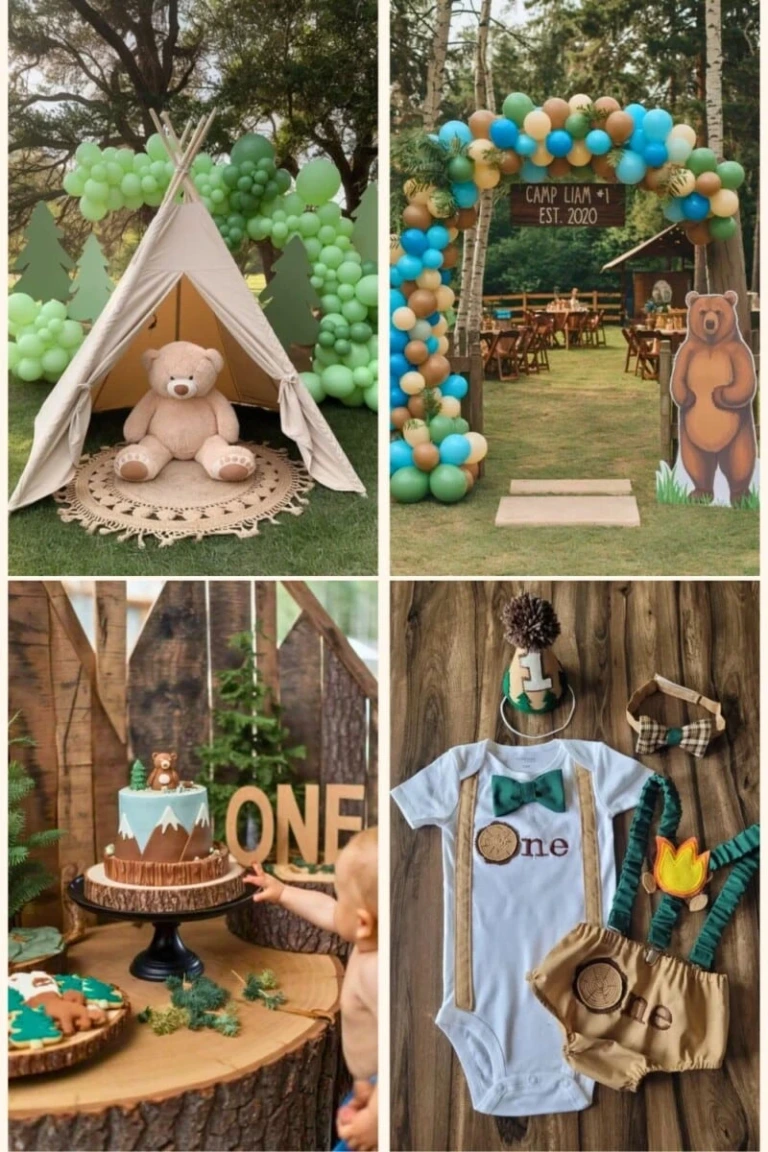
- One Happy Camper: Woodland animals, miniature tents, and outdoor-inspired decorations.
- Little Pumpkin: A cozy autumn celebration with orange and cream colors.
- Under the Sea: Fish, turtles, bubbles, and ocean-blue decorations.
- Teddy Bear Picnic: Plush bears, picnic baskets, and neutral decorations.
You can also skip character-based themes entirely and choose two or three coordinating colors.
For example, sage green, ivory, and beige can create an elegant atmosphere, while pastel pink, lavender, and peach offer a playful look.
Once you’ve selected a theme, focus on a few noticeable elements rather than decorating every corner.
A birthday banner, coordinated tableware, and one attractive photo backdrop are often enough to bring the entire celebration together.
Step Four: Choose a Date and Time
The best time for a first birthday party depends more on your baby’s daily routine than on traditional party schedules.
At twelve months, many babies still take one or two daytime naps. Scheduling a celebration during their usual sleeping hours can result in a tired, uncomfortable birthday child.
Look at your baby’s normal schedule and identify when they’re typically happiest and most energetic.
For some families, a late-morning gathering works beautifully. Others may prefer an afternoon celebration after nap time.
Consider keeping the main event around 90 minutes to two hours, especially if several babies or toddlers will attend.
A shorter gathering gives everyone time to socialize, enjoy refreshments, take photographs, and celebrate without overwhelming younger guests.
You should also consider the availability of grandparents, close relatives, and other people you particularly want to include.
Weekend celebrations may be more convenient for working adults, although a weekday gathering can work well for a smaller group.
There’s no requirement to celebrate on your baby’s exact birthday. Choosing a nearby date that works better for your family is perfectly reasonable.
If you want to avoid serving a complete lunch or dinner, schedule the celebration between traditional mealtimes and offer light refreshments instead.
Step Five: Guest List and Birthday Party Invitations
Once you’ve established your budget, venue, theme, and date, you can finalize the guest list.
First birthday parties are often more about family connections than children’s entertainment, so it’s perfectly normal for adults to outnumber young guests.
Start by listing the people you most want to celebrate with.
This might include grandparents, aunts, uncles, cousins, close friends, and families with children around your baby’s age.
Next, compare your guest count with the available space and catering budget.
Avoid inviting more people than your venue can comfortably accommodate, especially if several guests will bring strollers or young children.
When preparing invitations, include the essential details:
- Your baby’s name and first birthday celebration
- Date and starting time
- Venue address
- RSVP deadline and contact information
- Any useful parking or arrival instructions
- Optional dress code or theme information
Digital invitations are a convenient, affordable option. You can create a personalized design featuring your baby’s photograph and share it through email or messaging apps.
Printed invitations are another lovely choice, particularly if you enjoy keeping physical mementos.
Try to send invitations approximately three to four weeks before the celebration, or earlier if guests need to travel.
Requesting RSVPs helps you estimate food quantities, arrange seating, and avoid unnecessary purchases.
Next Steps for First Birthday
With the major decisions completed, it’s time to organize the details that make your celebration enjoyable and comfortable.
These include the menu, birthday cake, decorations, and all the practical supplies you’ll need on the day.
Birthday Party Food Ideas
Food is an important part of most birthday celebrations, but your menu doesn’t need to be complicated.
Choose dishes that suit the time of day, your budget, and the ages of your guests.
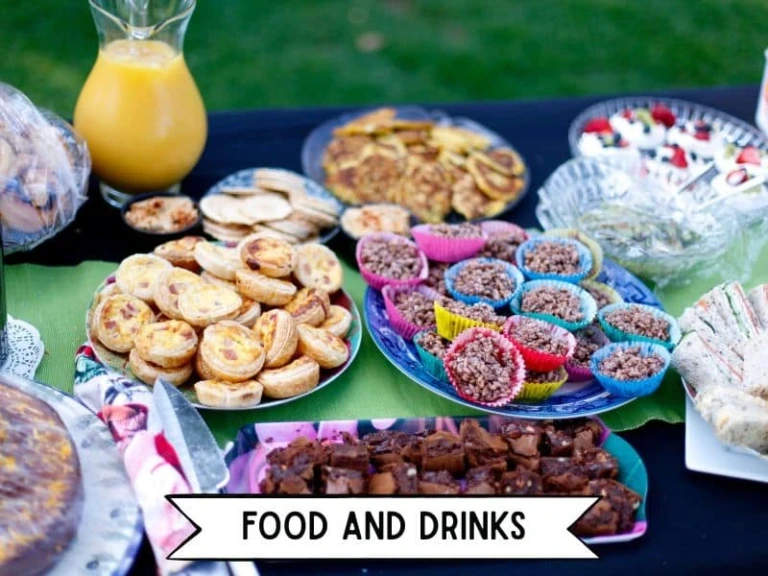
If you’re hosting a morning party, consider breakfast-inspired refreshments such as mini pancakes, muffins, fruit platters, and sandwiches.
For an afternoon celebration, you could serve:
- Mini sandwiches or wraps
- Baked chicken bites
- Cheese and crackers
- Vegetable platters with dips
- Pasta salad
- Mini pizzas
- Fresh fruit
- Cupcakes or cookies
If several toddlers are attending, provide simple, age-appropriate foods that are easy to handle.
Soft fruit pieces, tender cooked vegetables, and small portions of familiar foods are often suitable options.
Pay special attention to choking hazards. Whole grapes, popcorn, nuts, and large chunks of hard or sticky foods are unsafe for young children. Grapes should be quartered lengthwise, and other foods should be prepared appropriately for each child’s developmental stage.
Keep young children seated and supervised while eating.
It’s also helpful to ask parents about food allergies or dietary restrictions before finalizing the menu.
For drinks, offer water and a few options for adults. Babies under twelve months should not be given honey, and sugary drinks are unnecessary for young children.
Helpful planning tip: Choose foods that can be prepared ahead of time so you aren’t spending the entire party in the kitchen.
1st Birthday Party Cake
The birthday cake is often the centerpiece of a first birthday celebration.
Whether you prefer a professionally decorated cake or something homemade, choose a design that complements your theme.
A simple cake with your baby’s name, a number-one topper, or a few decorative details can look just as beautiful as an elaborate creation.
Many parents also consider a smash cake.
A smash cake is a small cake prepared specifically for the birthday child to explore, touch, and taste. It can create adorable photographs, although not every baby enjoys getting messy.
If you’d rather avoid purchasing two cakes, you can simply offer your baby a small serving from the main birthday cake.
Other possibilities include mini cupcakes, a soft homemade cake, or a lightly frosted sponge cake.
Before ordering, consider the number of guests, serving sizes, and any allergies.
For your baby’s portion, avoid hard decorations, choking hazards, and non-edible toppers. Remove candles and decorative picks before serving.
If you want a customized cake from a bakery, place your order well in advance, especially during busy holiday seasons.
Remember that the cake-cutting moment doesn’t have to be perfect. Your baby may laugh, cry, grab the frosting, or completely ignore the cake.
Those unexpected reactions often become the sweetest memories.
Decorations
First birthday decorations should create a cheerful atmosphere without making the venue feel crowded or overwhelming.
Start with a simple color palette that matches your chosen theme.
Then select a few decorative elements that will make the biggest visual impact.
Consider including:
- A personalized first birthday banner
- A milestone photo display showing your baby’s first year
- A themed tablecloth or table runner
- Coordinated plates, cups, and napkins
- A decorated cake table
- A comfortable photo area
- Soft fabric garlands or paper decorations
- A high-chair banner secured safely away from your baby’s reach
A monthly photo display is especially meaningful. Arrange twelve photographs, one from each month, to show how much your baby has changed.
You can also create a small memory table featuring a favorite stuffed animal, baby shoes, or other keepsakes.
When decorating, prioritize safety.
Uninflated or broken balloons can pose serious choking hazards to young children. Keep balloons and small decorative pieces out of reach, and remove broken balloon fragments immediately.
Avoid loose ribbons, accessible cords, sharp decorations, and unstable displays.
You don’t need to cover every wall or surface. A few coordinated decorations can create a lovely atmosphere while leaving plenty of space for guests to move comfortably.
Shopping List
Creating a detailed shopping list is one of the simplest ways to stay organized and prevent last-minute stress.
Separate your list into categories so you can easily track what you’ve purchased and what still needs attention.
Party essentials
- Invitations
- Plates, cups, and napkins
- Serving utensils
- Tablecloths
- Food containers
- Drinks and refreshments
- Birthday candles
- Cake knife and serving plates
Decorations
- Birthday banner
- Photo backdrop
- Themed centerpieces
- Cake topper
- High-chair decorations
- Photo display materials
Baby essentials
- Birthday outfit
- Comfortable backup clothes
- Diapers and wipes
- Bibs
- Baby-friendly snacks
- Favorite toys
- Changing supplies
Practical extras
- Trash bags
- Paper towels
- Cleaning wipes
- Extra seating
- Food storage containers
- Phone charger or camera batteries
- First-aid supplies
Check off items as you purchase them, and keep everything together in a designated storage area.
It’s also useful to prepare a separate bag containing everything your baby may need during the celebration.
Having spare clothes, diapers, snacks, and comfort items nearby can make unexpected situations much easier to manage.
Overwhelmed by First Birthday Planning? Start Here.
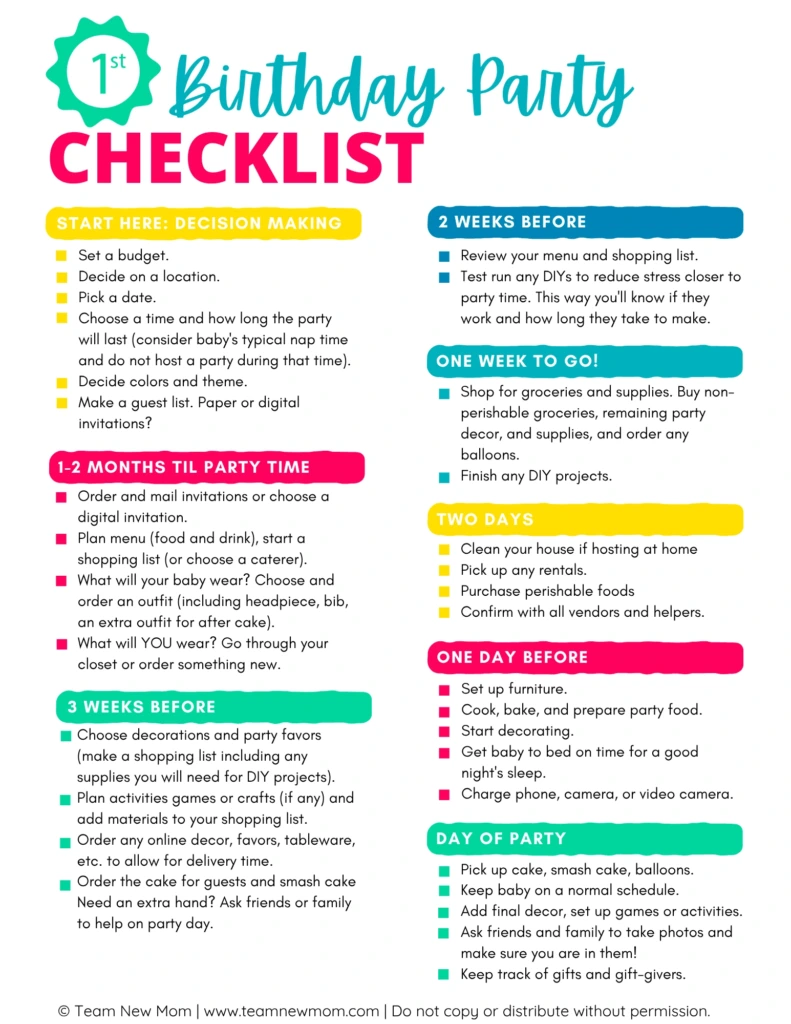
If your first birthday planning checklist seems endless, organizing everything into a simple timeline can make the process much more manageable.
You don’t need to complete every task at once.
A practical approach is to divide your preparations into smaller stages.
| When | What to organize |
|---|---|
| 6 to 8 weeks before | Set the budget, choose a venue, select a date, and consider themes |
| 4 to 5 weeks before | Finalize the guest list, send invitations, and contact cake suppliers |
| 2 to 3 weeks before | Plan the menu, purchase decorations, and organize party supplies |
| 1 week before | Confirm RSVPs, review food quantities, and prepare the birthday outfit |
| 1 to 2 days before | Prepare suitable foods, organize supplies, and set up decorations where practical |
| Party day | Follow your baby’s routine, welcome guests, take photos, and enjoy the celebration |
You can simplify your workload further by assigning small responsibilities to trusted family members.
For example, one person might collect the cake, another could arrange refreshments, and someone else could help capture photographs.
Preparing a basic schedule for the party itself can also be useful.
You might begin with guests arriving and enjoying refreshments, followed by a few family photographs, cake cutting, and relaxed socializing.
Keep this schedule flexible. If your baby becomes tired or needs feeding, there’s no reason to force the celebration to continue exactly as planned.
The goal is to create a happy experience, not to follow a perfect timetable.
FAQs About Planning a First Birthday Party
When should you start planning a 1st birthday party?
For most families, beginning approximately six to eight weeks before the birthday provides enough time to organize a comfortable celebration.
This allows you to compare venues, decide on a theme, invite guests, and arrange food without rushing.
If you’re planning a large event or hoping to book a popular venue, starting three months ahead may be helpful.
Customized cakes, professional photography, and specialty decorations may also require additional preparation time.
For a small celebration at home, however, a few weeks may be sufficient.
Focus on booking anything that depends on availability first. Decorations and smaller purchases can usually wait until closer to the event.
What do you do at a first birthday party?
First birthday parties generally work best when activities are simple and flexible.
Most one-year-olds aren’t ready for organized party games with instructions, so there’s no need to plan an elaborate entertainment schedule.
Instead, create opportunities for relaxed play and meaningful family moments.
Some enjoyable activities include:
- Bubble play: An adult can blow bubbles while babies watch and explore.
- Soft play area: Provide age-appropriate toys, soft blocks, and play mats.
- Family photo session: Capture pictures with parents, grandparents, and close relatives.
- Birthday time capsule: Invite guests to write messages for your child to read when they’re older.
- Milestone guessing game: Ask adults to guess when your baby reached certain milestones.
- Cake celebration: Gather everyone for singing, photographs, and cake.
If older children are attending, provide a separate activity table with coloring sheets, stickers, or simple crafts suitable for their ages.
Avoid loud party poppers, small loose decorations, and activities that could frighten or overwhelm babies.
You can also create a quiet corner where your child can take a break from the excitement.
A few meaningful activities are usually more enjoyable than a packed schedule.
Do I need to give out birthday party favors?
Party favors are entirely optional for a first birthday celebration.
Your guests are attending to celebrate your child, and most won’t expect a gift in return.
If you’re working with a limited budget, skipping favors is an easy way to reduce expenses.
However, if you enjoy preparing small thank-you gifts, choose something useful and age-appropriate.
Possible ideas include mini coloring books for older children, small packets of crayons suitable for their age, personalized cookies for adults, or simple thank-you cards.
Avoid giving babies toys with detachable small parts or other choking hazards.
Another meaningful alternative is to send guests a digital photograph from the celebration along with a short thank-you message.
This creates a personal keepsake without adding much expense.
What else should I keep in mind for a 1st birthday party menu?
When planning the menu, remember that guests may have very different food preferences and dietary requirements.
Ask about allergies before purchasing ingredients or placing catering orders.
If someone has a serious food allergy, discuss appropriate precautions with them rather than assuming that removing one ingredient makes a dish safe.
Provide a variety of options so both adults and children have something suitable to eat.
It’s also important to think about food storage and serving temperatures.
Cold foods should remain chilled until serving, while hot dishes should be kept at safe temperatures. Avoid leaving perishable foods sitting out for extended periods.
For younger children, make sure foods are prepared in safe sizes and textures.
Keep choking hazards away from babies and toddlers, even if those foods are intended for adults.
If you’re serving cake, consider offering fresh fruit or another simple dessert as an alternative.
Finally, avoid preparing excessive quantities. Use your confirmed guest count to estimate portions, and remember that a short afternoon gathering typically requires less food than a full lunch or dinner celebration.
Be Present and Have a Great Time Celebrating Your Birthday Boy or Birthday Girl
Your baby’s first birthday marks an incredible year of growth, learning, and family memories.
While it’s natural to want beautiful decorations, delicious food, and wonderful photographs, the most meaningful part of the celebration is spending time with the people who love your child.
Don’t worry if your baby refuses to wear the birthday hat, becomes shy around guests, or needs an unexpected nap. These moments are completely normal.
Give yourself permission to enjoy the celebration instead of constantly checking whether everything is perfect.
Ask someone else to take photographs occasionally so you can be present in the memories rather than always standing behind the camera.
Whether you host a backyard picnic, a cozy gathering in your living room, or a larger themed celebration, your baby’s first birthday can be special without being complicated.
A little thoughtful preparation, a comfortable environment, and plenty of love are all you need to celebrate this beautiful milestone.
Most importantly, remember to celebrate yourself, too. You’ve completed an extraordinary first year of parenthood, and that’s something worth recognizing.
Happy first birthday to your little one!