10 Mistakes to Avoid for the Ultimate First Birthday Bash
Your baby’s first birthday is a special milestone worth celebrating. After twelve months of new experiences, sleepless nights, tiny achievements, and countless precious memories, you finally get to celebrate your little one’s first trip around the sun. Whether you’re planning a small family gathering or a lively party with friends, you want the day to feel joyful, meaningful, and memorable.
However, planning a first birthday party can be surprisingly challenging. Babies have their own schedules, guests may have different needs, and even simple decisions about food, decorations, and activities can become overwhelming. The good news is that you don’t need an elaborate event to make the day wonderful.
A little preparation can help you avoid common mistakes and focus on what matters most: celebrating your child and enjoying the moment with the people you love. Here are ten first birthday party mistakes to watch out for, along with practical ways to make your celebration easier and more enjoyable.
Mistake #1: Setting Unrealistic Expectations
It’s easy to picture a perfectly styled birthday party with beautiful decorations, coordinated outfits, adorable photographs, and a happy baby smiling throughout the entire celebration. Social media can make these expectations even harder to ignore. But real life with a one-year-old rarely follows a picture-perfect plan.
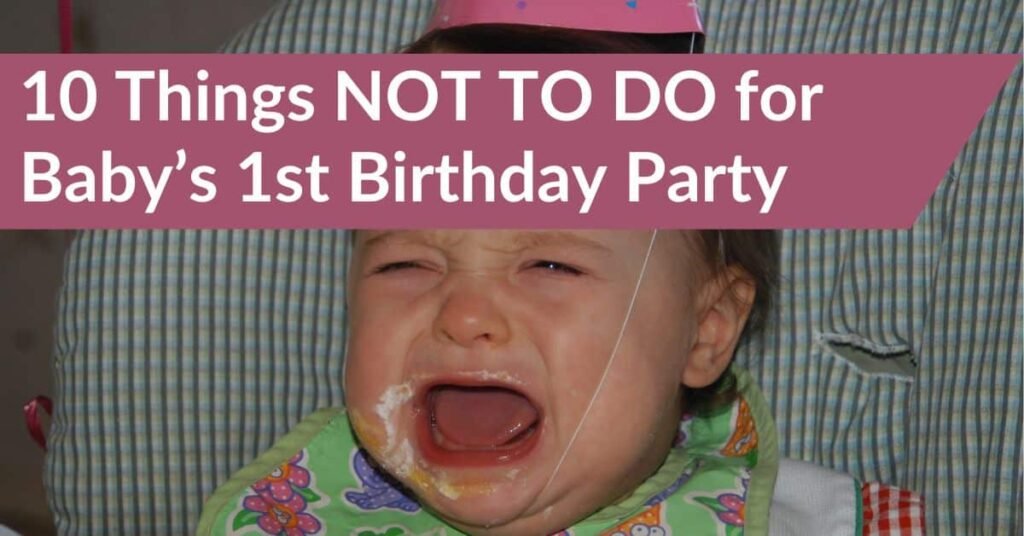
Your baby might cry when everyone sings, refuse to wear the special birthday outfit, or become fascinated with an ordinary cardboard box instead of the expensive toys you purchased. None of these things means the party has gone wrong.
Remember that your child is still learning how to handle unfamiliar surroundings, new faces, and exciting experiences. A crowded room or a sudden burst of applause might feel overwhelming rather than entertaining.
Instead of trying to create a flawless event, decide what would make the day meaningful for your family. Perhaps it’s a homemade cake, a few photographs with grandparents, or watching your baby explore a pile of colorful balloons from a safe distance.
Set a realistic budget and choose decorations and activities that fit your time and energy. You can create a beautiful celebration without hiring multiple vendors or purchasing every matching accessory.
Most importantly, leave room for unexpected moments. The little things that don’t go according to plan may eventually become your favorite birthday memories.
Mistake #2: The Wrong Schedule
Timing can make a tremendous difference when you’re celebrating with a one-year-old. A party scheduled during nap time or too close to bedtime can leave your baby tired before the festivities even begin.
Before choosing a start time, consider your child’s usual sleeping and feeding routine. Many babies are happiest after a nap, when they’ve had a chance to wake up, eat, and settle into their surroundings. If your little one typically naps in the early afternoon, a morning celebration might work better.
Think about your guests, too. If relatives are traveling with young children, an earlier gathering may be more convenient than an evening event.
Keep the main celebration relatively short. Around two hours can be enough for guests to arrive, enjoy some food, sing happy birthday, take pictures, and share cake. You can always allow close family members to stay longer if everyone is comfortable.
It’s also helpful to plan the important moments in advance. Serve food before your baby becomes hungry, take family photographs while your child is still cheerful, and bring out the birthday cake before tiredness sets in.
Build flexibility into the schedule rather than treating it as a strict timetable. If your baby needs an unexpected feeding or a few minutes of quiet time, adjust the plan. A relaxed schedule makes the celebration more enjoyable for everyone.
Mistake #3: Not Keeping it Intimate:
A first birthday can feel like an opportunity to invite everyone who has been part of your family’s journey. Extended relatives, friends, neighbors, coworkers, and parents from baby groups might all seem like natural guests.
However, a large gathering isn’t necessarily the best choice for every child.
One-year-olds are still developing their social skills and may feel uncomfortable when surrounded by unfamiliar people. Some babies enjoy the attention, while others prefer familiar faces and quieter environments. A crowded room can also make it difficult for your child to rest, play, or receive individual attention.
Consider your baby’s temperament before deciding on the guest list. If your little one takes time to warm up to people, a small gathering with close family and friends might be ideal. If your child enjoys busy social settings, you may feel comfortable inviting a larger group.
Think practically about your available space, too. Guests need room to sit, move around, eat, and keep an eye on their children. Too many people in a small home can create unnecessary stress.
You don’t have to invite everyone to the birthday party to show that you care about them. You can share photographs afterward, arrange separate visits, or celebrate with different groups on another day.
The goal is to create an environment where your baby feels secure and you can enjoy spending time with the people who matter most.
Mistake #4 Skipping the Nap
When you’re busy decorating, preparing food, and welcoming guests, it may seem tempting to shorten your baby’s nap or skip it altogether so the party can happen without interruption.
Unfortunately, a tired baby may find it much harder to cope with an exciting day.
Missing a nap can lead to irritability, crying, difficulty settling down, and less interest in activities. Your child might become overwhelmed just as guests arrive or become upset when it’s time to sing and cut the cake.
Try to protect your baby’s normal sleep routine as much as possible. Arrange the party around the usual nap window rather than expecting your child to adjust to your plans.
If your baby naps at home, make sure the sleeping space remains available during the celebration. If you’re hosting elsewhere, consider whether there’s a suitable place for your child to rest safely.
You can also ask another trusted adult to help with party preparations while you focus on your baby’s needs. Setting up decorations the previous evening and preparing food ahead of time can reduce last-minute pressure.
If your baby misses a nap despite your best efforts, don’t panic. Offer comfort, reduce stimulation, and be willing to shorten the celebration if necessary.
A well-rested baby is more likely to enjoy the experience, and you’ll have a better chance of enjoying it, too.
Mistake #5: Not Considering All Your Guests When Planning the Menu
Food is an important part of most birthday celebrations, but planning the menu involves more than choosing a cake and a few party snacks. Your guests may have different dietary requirements, allergies, cultural preferences, and feeding needs.
Before finalizing the menu, ask guests about any food allergies or restrictions. Include a few options for people who avoid particular ingredients, and label dishes when necessary. If a guest has a serious allergy, take appropriate precautions to prevent cross-contact rather than assuming that removing an ingredient from the visible dish is sufficient.
You’ll also need to consider what your one-year-old can safely eat.
By twelve months, many children enjoy a variety of family foods, provided the textures, ingredients, and preparation are appropriate for their developmental stage. Offer familiar foods alongside anything new, and supervise your baby while eating.
Avoid common choking hazards such as whole grapes, whole nuts, popcorn, hard candies, and chunks of hard raw vegetables. Cut round foods such as grapes and cherry tomatoes lengthwise into quarters, and modify other foods into age-appropriate shapes and textures. Avoid large, tough pieces of meat and thick spoonfuls of nut butter.
An important food safety reminder: Honey, including honey baked into foods, should not be given to babies younger than twelve months because it can cause infant botulism. If you want honey in the birthday menu, make sure your child has actually reached their first birthday.
For the birthday cake, you can choose a small portion with a soft texture and ingredients your baby already tolerates. A separate mini cake may make the celebration easier, but it’s entirely optional.
Finally, plan enough food for your guests without creating unnecessary waste. A simple menu with a few well-chosen options can be just as satisfying as an elaborate buffet.
Mistake #6: Forgetting About Safety
Birthday parties often involve decorations, unfamiliar toys, excited children, and plenty of activity. While these things make celebrations fun, they can also introduce hazards that aren’t normally present in your home.
Before guests arrive, take a few minutes to inspect the party area from a child’s perspective.
Keep electrical cords, hot drinks, candles, cleaning products, and sharp objects out of reach. Secure unstable furniture and decorations, and block access to stairs, balconies, pools, or other dangerous areas. If you’re hosting outdoors, consider sun exposure, temperature, insects, and access to water.
Be especially careful with balloons. Uninflated balloons and broken balloon pieces can pose serious choking hazards, so keep them away from babies and dispose of popped balloons immediately. Never leave your child alone with balloons or small decorative items.
Choose toys and party favors that are appropriate for the ages of the children attending. Small objects, detachable parts, and items containing button batteries or powerful magnets can be dangerous if swallowed.
Food safety deserves equal attention. Don’t leave perishable foods sitting out for extended periods, and keep hot dishes away from children. Make sure babies eat while seated upright and are actively supervised by a responsible adult.
If candles are part of your cake tradition, have an adult handle the flame and keep it away from your baby’s hands, clothing, and decorations.
A quick safety check before the party starts can prevent avoidable accidents and help everyone relax.
Mistake #7: Not Taking Photos of Yourself!
Parents often spend so much time organizing a birthday party that they forget to appear in the photographs. You might capture dozens of pictures of your baby playing, opening gifts, and enjoying cake, only to realize afterward that you’re missing from nearly all of them.
It’s easy to stay behind the camera because you’re managing guests, serving food, or making sure everything runs smoothly. But this celebration is a milestone for you, too.
You’ve spent a year caring for your child, learning new routines, overcoming challenges, and discovering a different kind of love. Years from now, you’ll probably appreciate photographs that show you sharing this moment with your baby.
Ask a family member or friend to take pictures throughout the event. If your budget allows, you could hire a photographer for a short session, but professional photography isn’t necessary.
Create a small list of moments you don’t want to miss:
- A family photograph with both parents and the birthday baby.
- A picture with grandparents or other important relatives.
- A photograph of your baby with the birthday cake.
- A candid moment of cuddling, playing, or laughing.
- A group picture with the people who helped celebrate the milestone.
You don’t need to pose for every image. Some of the most meaningful photographs happen naturally when you’re comforting your child or laughing together.
Remember to put your phone away occasionally, too. Capturing memories is wonderful, but experiencing the celebration without constantly looking through a screen is equally valuable.
Mistake #8 Forgetting the Grown-Ups
Your baby’s first birthday is centered on your little one, but adults make up much of the guest list. Parents, grandparents, relatives, and friends will appreciate a comfortable environment where they can relax and enjoy the gathering.
You don’t need to organize elaborate entertainment for adults. A few thoughtful touches can make a big difference.
Provide enough seating, particularly for older relatives and guests who may have difficulty standing for long periods. Make sure food and drinks are easy to access, and leave enough space for people to talk without crowding the children’s play area.
If several guests don’t know one another, introduce them and help start conversations. You might create a simple photo display featuring highlights from your baby’s first year, giving everyone something enjoyable to look at and discuss.
For gatherings with multiple children, set up a designated play area with age-appropriate toys. This gives parents a chance to socialize while keeping younger guests entertained.
A small activity can also bring everyone together. For example, invite guests to write a birthday wish for your child or share a favorite memory from the baby’s first year. Keep the activity optional so nobody feels pressured to participate.
Don’t forget to arrange refreshments for yourself and anyone helping you host. Parents sometimes spend the entire party looking after everyone else and barely get a chance to eat.
A comfortable gathering allows adults to connect while keeping the focus on celebrating your growing family.
Mistake #9: Not Having a Quiet Space
A birthday party can be exciting, but all the noise, movement, and attention may overwhelm a one-year-old. Even a baby who enjoys meeting people can need a break from the activity.
Setting aside a quiet space gives your child somewhere familiar to settle down when the celebration becomes too stimulating.
If you’re hosting at home, consider using a bedroom or another peaceful room away from the main party area. Keep the lighting comfortable, reduce noise, and have a few familiar items available, such as a favorite comfort toy or book.
If the party is taking place at a rented venue, identify a quieter area before guests arrive. You may also want to bring a stroller or other familiar equipment, provided it’s used safely and appropriately.
Let guests know that the quiet space is available if your baby needs a break. This can be particularly helpful when several relatives want to hold the child or when everyone gathers around for photographs.
Watch for signs that your baby needs less stimulation. Turning away, rubbing their eyes, becoming unusually clingy, or starting to fuss may indicate tiredness or discomfort.
Don’t feel obligated to keep your child in the middle of the celebration. A short break with a parent or caregiver can help your baby feel secure and comfortable.
A quiet space isn’t just useful for the birthday child. Parents and other young guests may appreciate having somewhere peaceful to feed a baby, change a diaper, or take a moment away from the crowd.
Mistake #10: Stressing Out
Planning a first birthday can involve a surprising number of decisions. You may worry about the decorations, menu, guest list, timing, photographs, gifts, and whether everyone will enjoy themselves.
When every detail starts to feel important, it’s easy to lose sight of why you’re celebrating in the first place.
Remember that your baby won’t judge the party by how perfectly the decorations match or whether you served homemade treats. Your child is much more likely to benefit from feeling safe, loved, and comfortable around familiar people.
Start by identifying your priorities. Choose three things that matter most to you, such as having family photographs, sharing a birthday cake, and spending time with relatives. Treat everything else as optional.
Delegate tasks whenever possible. Ask someone to pick up the cake, another person to help arrange the food, and a trusted family member to greet guests. Accept offers of assistance instead of trying to manage every detail yourself.
Give yourself enough preparation time and avoid leaving all the work until the morning of the party. Simple decorations, prepared snacks, and a manageable guest list can reduce pressure considerably.
It’s also worth remembering that the celebration doesn’t have to follow a rigid plan. If the baby becomes tired, the weather changes, or an activity doesn’t work out, adjust accordingly.
You are allowed to sit down, eat something, and enjoy your own child’s birthday. The people who care about you are there to celebrate, not to inspect every detail.
A successful party isn’t one where nothing goes wrong. It’s one where you create meaningful memories without exhausting yourself in the process.
Overwhelmed by First Birthday Planning? Start Here.
If the thought of organizing your baby’s first birthday feels overwhelming, begin with a few simple decisions rather than trying to plan everything at once.
Use this simple checklist to get started:
1. Choose a realistic budget. Decide how much you’re comfortable spending before booking vendors or buying decorations.
2. Set the date and time. Consider your baby’s sleep schedule, feeding routine, and the availability of important guests.
3. Create your guest list. Invite the people who will make the day meaningful, keeping your available space and your baby’s temperament in mind.
4. Choose a simple theme. Pick a favorite color, animal, storybook-inspired idea, or seasonal concept. Let the theme guide a few decorations rather than dictating every purchase.
5. Plan the food. Ask about dietary restrictions, prepare age-appropriate options for your baby, and account for choking hazards and food allergies.
6. Organize a few activities. A cake moment, family photographs, and a small play area may be all you need.
7. Prepare the space. Arrange seating, create a safe play area, and identify a quiet room where your baby can rest.
8. Ask for help. Share practical tasks with friends and relatives instead of handling every responsibility alone.
9. Prepare essentials in advance. Keep diapers, wipes, spare clothes, feeding supplies, and any familiar comfort items close by.
10. Leave room for flexibility. Your baby may need an extra nap, a feeding break, or an earlier end to the celebration. Make adjustments without feeling guilty.
You can also choose a smaller celebration if that better suits your family. A homemade cake, a few balloons placed safely out of reach, and a gathering with loved ones can be just as meaningful as a large themed party.
Remember that planning should support the celebration, not take over your life. Focus on what your family enjoys, and let go of details that don’t add much value.
You’ve Got This!
Your baby’s first birthday marks a remarkable year of growth, discovery, and change. It’s a chance to celebrate not only your child’s milestones but also the journey you’ve taken as a family.
You don’t need a perfect venue, an expensive cake, elaborate decorations, or a packed schedule to make the day special. What matters most is creating a safe, comfortable environment where your little one can enjoy familiar faces, explore at their own pace, and feel surrounded by love.
Some moments may be wonderfully planned, while others will happen unexpectedly. Your baby might fall asleep before the cake arrives, cry during the birthday song, or decide that playing with wrapping paper is more exciting than opening presents. Those moments are part of the experience, too.
Take photographs, accept help, protect your child’s routine, and give yourself permission to enjoy the party. If something doesn’t go according to plan, remember that a small change won’t diminish the importance of the milestone.
One day, you’ll look back on this first birthday and remember how tiny your baby was, how quickly the year passed, and how much your family changed along the way.
So keep your plans manageable, surround yourself with people who care about you, and celebrate this special occasion in a way that feels right for your family.
Your baby only turns one once, but you don’t need one perfect day to create memories that last a lifetime.